


Crystal Quest Water Filters
Reverse Osmosis Membranes
Reverse Osmosis Membranes
Couldn't load pickup availability
Share


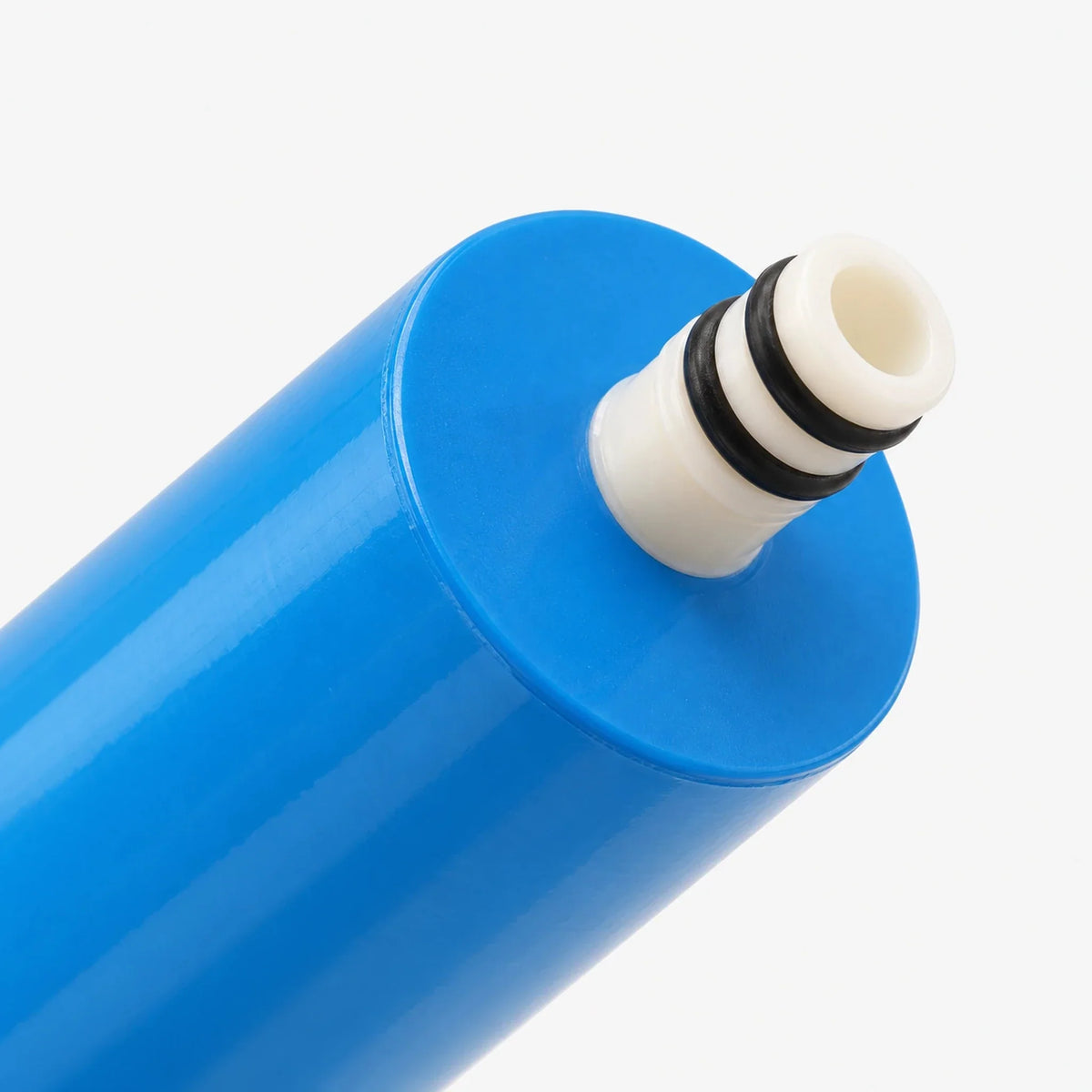


Reverse osmosis water that has started to taste like tap water again. A storage tank that takes all night to fill. A TDS meter reading that creeps up month after month. When fresh pre-filters do not fix it, the membrane is the part that has worn out. It is the core purification stage of every RO system.
This listing brings Crystal Quest's thin film composite (TFC) reverse osmosis membranes together in one place: the residential 50, 75 and 100 GPD membranes for under-sink, countertop and bottleless cooler systems, and the larger 2.5" x 14", 2.5" x 21", 2.5" x 40" and 4" x 40" elements used in whole house and commercial RO. The 100 GPD membrane is the standard in every Crystal Quest Thunder under-sink RO system; 50 and 75 GPD remain available for the systems that list them.
At a glance
- Purer drinking water again: a new membrane restores the reduction of dissolved solids, including lead, mercury, cadmium, trivalent chromium, fluoride and nitrates
- Seven TFC formats in one place, each with its own part number
- Up to 99% reduction of dissolved solids (TDS)
- Plan on 2 to 3 years of service, depending on feed water quality, system configuration and usage
What you are looking at
A reverse osmosis membrane is a spiral wound element. Long leaves of membrane are wrapped around a perforated center tube, with polyethylene netting between the layers so water can travel across every square inch of membrane surface. Polyolefin inner and outer wraps hold the roll together, and polypropylene end caps with Buna-N gaskets seal it inside the housing.
The residential 50, 75 and 100 GPD membranes measure 1.75" x 11.75" for 2" x 12" residential membrane housings. The larger elements carry a brine seal for commercial-style pressure vessels.
How a thin film composite RO membrane works
A barrier thinner than a soap bubble
A TFC membrane is built in layers. A polyester fabric gives it strength, a porous support layer sits on top of that, and the working surface is an ultra-thin polyamide film. Water molecules pass through that polyamide layer. Dissolved salts and metals, which travel through water as charged ions surrounded by water, are turned back at the surface.
Pressure does the work
Left alone, water moves from the purer side of a membrane toward the saltier side. Reverse osmosis reverses that: household water pressure forces water through the membrane and leaves dissolved solids behind. The purified water (permeate) collects in the center tube and flows to the storage tank. The rejected solids stay on the feed side and are carried away in a stream of concentrate to the drain.
What gets through, and what does not
Dissolved minerals and metals are rejected. Dissolved gases and some very small, uncharged molecules pass more easily, which is why Crystal Quest RO systems put carbon stages before the membrane and a polishing stage after it.
Rated GPD is not what you will always get
GPD (gallons per day) is the production rating at the membrane's standard test conditions. At home, three things change real output: lower water pressure means less push, colder water moves through the membrane more slowly, and higher feed TDS pushes back harder. That is why the same membrane makes more water in one home than another.
Why chlorine is the membrane's enemy
The polyamide layer that does the purifying is damaged by chlorine. Once it is attacked, salts start slipping through and the damage does not reverse. Carbon pre-filters remove chlorine before it reaches the membrane, so keeping them current is the single best thing you can do for membrane life. Hard water is the other threat: high hardness can leave a crystallized layer of scale on the membrane surface.
Where the drain water goes
The concentrate stream carries rejected solids away and keeps the membrane surface from clogging. Crystal Quest RO systems send 1 gallon to drain for every 1 to 3 gallons of purified water.
What it reduces
Primary target: total dissolved solids (TDS), the minerals, salts and metals dissolved in your water. Crystal Quest lists lead, mercury, cadmium, trivalent chromium, fluoride and nitrates among the dissolved contaminants the membrane reduces.
Salt rejection: up to 99% of dissolved solids. Real-world rejection depends on your water's chemistry, temperature and TDS.
Handled by the other stages: chlorine and chloramine (carbon pre-filters), taste and odor (the polishing stage) and UV treatment on Thunder 3000 and 4000 models. Very hard water should be softened ahead of RO to protect the membrane from scale.
Why Crystal Quest
- Matched to our systems. Each rating and element size is the part named on Crystal Quest system replacement lists, so you are not guessing at a "fits most" membrane.
- Straight answers on output: what GPD means and what changes it.
- Over 1,000,000 people served since 1994. Crystal Quest builds under ISO 9001 quality management, has made water filtration in the USA for over 30 years and offers lifetime support by phone, email or chat.
Where it fits
- 100 GPD (CQE-RC-04064): the standard membrane in every Crystal Quest Thunder under-sink RO system, such as the Thunder 1000C.
- 75 GPD (CQE-RC-04063): listed as an optional membrane for Thunder systems.
- 50 GPD (CQE-RC-04041): the membrane listed for the Countertop Reverse Osmosis System and the SHARP, TURBO and Hybrid UF + RO bottleless water coolers.
- 2.5" x 14", 2.5" x 21", 2.5" x 40" and 4" x 40" elements: the sizes named on the Whole House Reverse Osmosis System replacement list and Crystal Quest commercial RO systems.
Common questions
How do I find the right reverse osmosis membrane?
Check the replacement list for your system or the label on the membrane you are replacing. The residential 50, 75 and 100 GPD membranes (1.75" x 11.75") and the larger 2.5" and 4" elements are separate formats and do not interchange.
Is a higher GPD rating always better?
GPD is the membrane's rated daily production, not faucet flow. Real output changes with water pressure, temperature and TDS. Use the rating your system lists, and ask Crystal Quest before changing it.
When should I replace my RO membrane?
Plan on every 2 to 3 years. Replace it sooner if your RO-water TDS keeps rising, or if production stays low with fresh pre-filters and normal water pressure.
What damages an RO membrane?
Chlorine is the biggest threat because it attacks the polyamide layer that does the purifying. Exhausted carbon pre-filters let it through. Hard water can also coat the membrane with scale, and long periods without use let water go stale in the system.
Can an RO membrane reduce fluoride from well water?
The published fluoride application is municipal water with inorganic fluoride. For fluoride from a well or another natural source, speak with Crystal Quest before choosing treatment.
Why does my RO system send water to the drain?
The concentrate stream carries away the solids the membrane rejects, which keeps the membrane surface clean. Crystal Quest RO systems send 1 gallon to drain for every 1 to 3 gallons of purified water.
Does a membrane come with pre-filters?
No. Each option is one membrane or element. Pre-filters are sold separately and are replaced on their own schedules.
Membrane options
| SKU | SIZE | SERVICE LIFE |
| CQE-RC-04041 | 50 GPD | 2 to 3 years* |
| CQE-RC-04063 | 75 GPD | 2 to 3 years* |
| CQE-RC-04064 | 100 GPD | 2 to 3 years* |
| CQE-RC-04084 | 2.5" x 21" TFC | 2 to 3 years* |
| CQE-RC-04111 | 2.5" x 14" TFC | 2 to 3 years* |
| CQE-RC-04109 | 2.5" x 40" TFC | 2 to 3 years* |
| CQE-RC-04086 | 4" x 40" TFC | 2 to 3 years* |
Membrane and performance
| Membrane type | Thin film composite (TFC) reverse osmosis, spiral wound |
| Residential membrane size | 1.75" x 11.75" for 2" x 12" residential membrane housings (50, 75 and 100 GPD) |
| Salt rejection | Up to 99% |
| Chlorine | Remove ahead of the membrane with carbon pre-filtration |
| Drain water (Crystal Quest RO systems) | 1 gallon to drain for every 1 to 3 gallons of purified water |
Residential 50, 75 and 100 GPD membranes
| Construction Materials | Operating Specifications |
| • Polypropylene End Caps | • Minimum Operating Pressure: 20 psi (1.4 bar) |
| • Buna-N Gaskets End Caps | • Maximum Operating Pressure: 60 psi (4.1 bar) |
| • Polyolefin Inner/Outer Wraps | • Minimum Operating Temperature: 40° F (4° C) |
| • Polyethylene Netting | • Maximum Operating Temperature: 90° F (32° C) |
*Service life is an estimate. Actual life depends on feed water quality, system configuration and usage.


